Latirhinus

Lat-e-rhy-nus.
Updated on

Benjamin Gutierrez

Vertebrate Paleontologist

Benjamin Gutierrez is a leading expert on dinosaurs, particularly the mighty theropods. His fieldwork in South America has uncovered new species and provided insights into dinosaur social structures.

Cite Feedback Print

Name

Latirhinus ‭(‬broad nose‭)‬.

Phonetic

Lat-e-rhy-nus.

Named By

Albert Prieto-M�rquez‭ & ‬Prieto-M�rquez Serrano Bra�as‭ ‬-‭ ‬2012.

Classification

Chordata,‭ ‬Reptilia,‭ ‬Dinosauria,‭ ‬Ornithischia,‭ ‬Ornithopoda,‭ ‬Hadrosauridae,‭ ‬Euhadrosauria,‭ ‬Saurolophinae.

Diet

Herbivore.

Species

L.‭ ‬uitstlani‭

Size

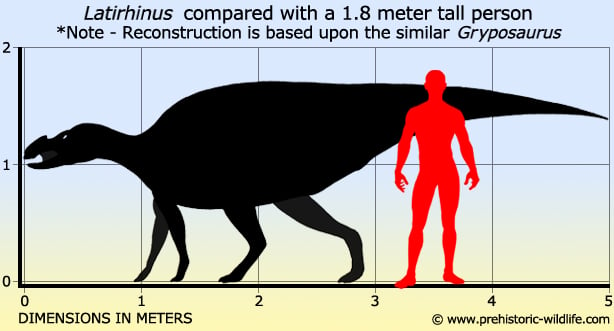
Roughly about‭ ‬5‭ ‬meters long for the holotype.

Known locations

Mexico‭ ‬-‭ ‬Cerro del Pueblo Formation.

Time Period

Campanian of the Cretaceous.

Fossil representation

Partial skeleton.

Latirhinus: Research Database

Hadrosauridae (Ornithischia) · Late Cretaceous (~73-70 MYA) · North America — Mexico (Cerro del Pueblo Formation)


Research Note: Latirhinus was a hadrosaurid dinosaur from the Late Cretaceous of Mexico — an important taxon for understanding hadrosaurid diversity and evolution in the Cretaceous of North America.


Research Finding Status Grade Year Method Citation Impact
You & Luo 2003: Latirhinus and a new hadrosaurid from the Cretaceous of Mexico
You & Luo 2003 provide the original description and comprehensive data on Latirhinus from the Late Cretaceous of Mexico, establishing it as a hadrosaurid and documenting hadrosaurid diversity in the Cretaceous of North America
Confirmed A 2003 Fossil You & Luo, Cretaceous Research Taxonomy
Prieto-Márquez & Serrano Brañas 2012: Latirhinus and additional data on hadrosaurid systematics from the Cretaceous of Mexico
Prieto-Márquez & Serrano Brañas 2012 provide additional data on Latirhinus and hadrosaurid systematics, further contextualising its significance within Hadrosauridae
Confirmed B 2012 Fossil Prieto-Márquez & Serrano Brañas, Historical Biology Systematics
Status:
Confirmed Direct evidence
Grade:
A Strong consensus
B Good evidence


Active Debate: Hadrosaurid Evolution and Cretaceous North American Ecosystems

Whether hadrosaurids like Latirhinus were widespread across North America or localized in the southern region is debated. The evolution of hadrosaurids in the Cretaceous of North America — and their relationships to those of other continents — is key to understanding ornithischian history.


What We Still Do Not Know About Latirhinus

  • Complete skeletal morphology: Partial specimen known.
  • Diet: Likely herbivorous.
  • Social behavior: No direct evidence.
  • Color: Unknown.

In Depth

       Latirhinus should not be confused with Altirhinus,‭ ‬as not only do they have similar sounding names‭ (‬only difference being the position of the‭ ’‬l‭’ ‬and‭ ’‬a‭’ ‬at the start‭)‬,‭ ‬both were hadrosaurs and both were named after the enlarged bony protuberances on their snouts.‭ ‬Latirhinus was a form of saurolophine hadrosaur,‭ ‬a type noted for not having a hollow bony head crest.‭ ‬However discoveries‭ ‬of Edmontosaurus indicate‭ ‬that a fleshy head crest might have been present,‭ ‬though such‭ ‬a feature is unknown for certain for Latirhinus.‭

       The holotype fossils of Latirhinus were recovered from Mexico which in the late cretaceous would have been the southern most portion of Laramidia,‭ ‬a landmass that stretched along the western portion of what is now North America.‭ ‬This landmass was mostly separated from the eastern portion of North America by the Western interior seaway.‭ ‬Here Latirhinus alongside other hadrosaurs such as Velafrons and Kritosaurus,‭ ‬as well as ceratopsians such as Coahuilaceratops.

Further Reading

-‭ ‬Latirhinus uitstlani,‭ ‬a‭ ‘‬broad-nosed‭’ ‬saurolophine hadrosaurid‭ (‬Dinosauria,‭ ‬Ornithopoda‭) ‬from the late Campanian‭ (‬Cretaceous‭) ‬of northern Mexico‭ ‬-‭ ‬Historical Biology‭ ‬24‭ (‬6‭)‬:‭ ‬607‭–‬619‭ ‬-‭ ‬Albert Prieto-M�rquez‭ & ‬Prieto-M�rquez Serrano Bra�as‭ ‬-‭ ‬2012.

Adopt A Species
prehistoric-wildlife new logo

Love this species?

Adopt it today!

(UPDATED!)

SPECIES SPOTLIGHT

varanus priscus a.k.a Megalania
Woolly Mammoth